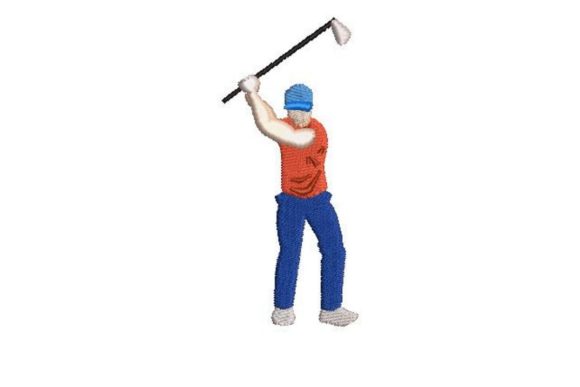
Olympic Golf Player Embroidery Review
As an embroidery designer who has spent years turning digital concepts into tangible, stitched realities for small businesses, I approach every new design asset with a critical eye. We are not just looking at pretty pictures; we are evaluating production viability, brand alignment, and customer appeal. Today, I am reviewing the Olympic Golf Player machine embroidery design. The product description highlights its suitability for polo shirts and golf bags, targeting those who identify with the spirit of Olympic-level play. But does it hold up as a serious asset for commercial merchandise, branded patches, and custom apparel?
First Impressions: Visual Personality and Brand Fit
The title "Olympic Golf Player" immediately suggests a blend of athleticism, prestige, and competitive spirit. From a design perspective, this feels less like a casual doodle and more like a badge of honor. For small business owners in the sports niche—whether you run a boutique golf shop, a local driving range, or a specialized apparel brand—this design carries weight. It projects professionalism and high standards.
Visually, designs associated with the Olympics often rely on clean lines, bold symbols, and clear hierarchy. If executed well, the Olympic Golf Player design likely balances intricate detail with readability. This is crucial for embroidered patches. A design that looks great on a screen but becomes a muddy blob when stitched is useless for merch. Based on the intended use cases mentioned (polos and golf bags), we can infer that the design prioritizes legibility and impact over delicate, fragile details. It feels premium, slightly playful yet respectful of the sport’s traditions. This makes it versatile enough for both serious athletes and recreational enthusiasts who want to show off their passion.
Real-World Business Applications
Let’s move beyond the screen and look at how this embroidery file performs in actual production scenarios. Small business owners need designs that offer multiple revenue streams. Here is where the Olympic Golf Player shines:
- Embroidered Patches: This is perhaps the strongest application. Golfers love pinning patches on their bags, hats, and jackets. A high-quality patch featuring this design can be sold as a standalone item or used as a value-add for larger purchases. It serves as a portable advertisement for your brand.
- Staff Uniforms and Aprons: For a café near a golf course or a pro-shop staff member, this design adds personality to work shirts. It creates a sense of team pride and connects the employee directly to the culture of the venue. Apron embroidery using this motif can also work well for bakery or food trucks located at sporting events.
- Cap Embroidery: The front panel of a baseball cap or visor is prime real estate. If the design scales well, it can serve as a striking chest logo accent. It signals expertise and affiliation instantly.
- Tote Bag Design: Canvas totes are staples for craft fairs and conferences. Stitching this onto a tote bag elevates the perceived value of the item, making it a desirable giveaway or sale item for customers.
- Product Packaging Accents: Don’t overlook the unboxing experience. A small, neatly stitched patch on a gift box or a hang tag can reinforce brand identity and create a memorable tactile experience for the buyer.
Strategic Considerations and Potential Pitfalls
Not every surface is created equal, and even the best digital embroidery file can fail if applied incorrectly. As a designer, I advise caution in the following areas:
Small Patch Sizes: If you plan to produce tiny patches (under 2 inches), you must scrutinize the fine details. Complex outlines or thin text may fill in during stitching, resulting in a loss of definition. Always test at the final production size before committing to bulk orders.
Curved Surfaces: Applying this design to caps or sleeves requires careful hooping. Curvature can distort the stitch direction, causing puckering. Ensure your stabilizer choice matches the fabric weight to maintain structural integrity.
Thread Color Contrast: The success of any embroidery relies heavily on contrast. On dark uniforms or black golf bags, light thread colors are essential. Conversely, dark threads on white polos might require a backing layer to prevent show-through. Evaluate the available thread colors against your target garment palette.
Fabric Texture: Textured fabrics, such as heavy canvas or waffle-knit polos, can hide stitches or cause uneven tension. Smooth fabrics like twill or polyester blends generally yield the crispest results. Be transparent with clients about which materials work best for this specific design.
High Stitch Density: Designs with dense fills can become stiff and uncomfortable, especially on lightweight apparel. Check the stitch density to ensure the finished product remains wearable and drapes naturally.
Impact on Brand Identity and Customer Trust
In the world of handmade products and small business merch, quality speaks louder than marketing copy. Using a professional-grade design like the Olympic Golf Player signals attention to detail. When a customer sees a cleanly stitched, well-proportioned logo on a product, they associate that precision with your overall business practices.
This design helps build brand identity by aligning your products with values of excellence and competition. It enhances customer trust because it suggests that you invest in quality assets rather than cutting corners. Furthermore, visually consistent branding across different items—caps, totes, and shirts—creates a cohesive look that boosts buyer engagement. Customers are more likely to purchase multiple items if they feel they are part of a unified collection.
Practical Designer Notes for Production
Before you start pressing buttons on your embroidery machine, follow these essential steps to ensure a successful launch:
- Test in Black and White: Convert the design to monochrome to check the balance of negative space and filled areas. This helps identify potential clutter without the distraction of color.
- Review Spacing: Zoom in on the digitization. Are elements too close together? Proper spacing ensures that stitches do not overlap unintentionally, preserving the design's clarity.
- Confirm Hoop Size: Verify that the design fits within standard hoop dimensions. If it is large, you may need multi-hooping, which increases production time and risk of misalignment.
- Test on Real Fabric: Never trust a screen mockup alone. Stitch the design on the actual fabric you intend to sell. This reveals issues with puckering, thread breakage, or color mismatch.
- Use Proper Stabilizer: Select the correct stabilizer (cut-away, tear-away, or water-soluble) based on the fabric type. Incorrect stabilization is the number one cause of poor embroidery results.
- Create a Printable Mockup: Use the digital file to generate a realistic mockup for client approval or Etsy listings. This allows you to visualize the product in context before producing physical samples.
- Check Commercial Licensing: Most importantly, confirm that you have the right to use this design asset for commercial purposes. Selling items with unauthorized designs can lead to legal issues. Ensure the license covers merchandising, patches, and bulk production.
The Olympic Golf Player design offers a strong foundation for small business owners looking to expand their sports-themed inventory. By understanding its strengths, respecting its limitations, and preparing thoroughly for production, you can transform this digital file into a profitable, high-quality physical product. Whether you are creating custom apparel for a local team or adding branded accents to your online store, this design has the potential to resonate with golf enthusiasts and elevate your brand presence.