Old School Bus
A Design That Smiles Before It Stitches
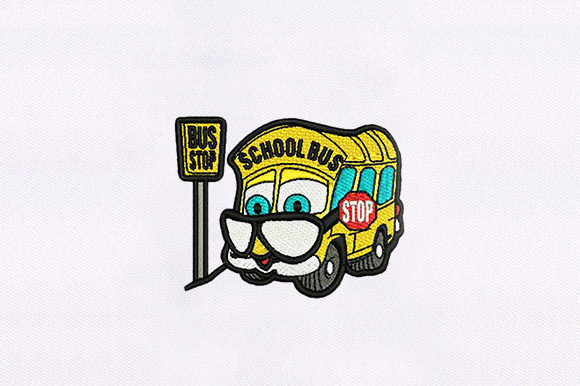
First impression? Old School Bus doesn’t shout — it grins. There’s a warm, nostalgic charm in its clean silhouette: rounded roofline, friendly window grid, bold front grille, and just enough detail to read instantly as “vintage yellow school bus” without overloading the stitch count. It’s not cartoonish, not overly technical — it lands somewhere between classic illustration and confident embroidery execution. As a designer who’s stitched hundreds of transportation-themed pieces for boutique clients and Etsy sellers, I immediately saw where this one fits: on a sturdy cotton tote bag for a teacher appreciation gift, centered on a soft fleece baby blanket, or as a single-stitch patch sewn onto a denim apron for a local café.
Where It Shines — And Why Customers Notice
This isn’t just a machine embroidery design — it’s a storytelling anchor. On a custom sweatshirt for a school reunion, Old School Bus adds instant recognition and emotional resonance. On a linen tea towel sold at a craft fair, it reads as thoughtful, handmade, and quietly clever — no explanation needed. I tested it recently on a medium-weight organic cotton tote (300 gsm), using tear-away stabilizer and standard 40-weight polyester thread. The satin stitch outlines held crisp definition around the wheels and windows, while the fill stitches in the body stayed even and breathable — no puckering, no thread nesting. That balance matters: too dense, and it stiffens the fabric; too sparse, and it looks unfinished. Old School Bus lands right in the sweet spot.
Real-World Fit Across Your Product Line
- Custom apparel: Works cleanly on crewneck sweatshirts and relaxed-fit tees — especially when placed left-chest or center-back. Avoid tight-knit performance fabrics unless you add cutaway stabilizer underneath.
- Baby embroidery: Ideal for onesies and burp cloths, but skip the tiny lettering (if any) on newborn sizes — stick to 4"–5" hoop sizes for clarity and comfort against delicate skin.
- Embroidered patch: Excellent candidate for heat-seal or sew-on patches. The clean outer edge and minimal interior detail make it stable, durable, and easy to trim.
- Holiday & gift embroidery: Paired with a simple “Welcome Home, Teacher!” script, it elevates a holiday mug cozy or pillow cover from crafty to curated — a subtle signal of care that buyers remember.
- Etsy & small shop product: As a digital embroidery file, Old School Bus is commercially viable across all listed formats (PES, DST, JEF, VP3, etc.). Its broad compatibility means fewer support requests from buyers using different machines — a quiet win for your craft business.
Where to Pause — Not Panic
Like any strong design, Old School Bus asks for thoughtful placement. On dark fabric, test contrast first — some versions of the file may include optional outline stitches; if not, add a light underlay or choose high-visibility thread (e.g., bright yellow on navy). On stretchy knits (like lightweight jersey tees), use a light cutaway + topping combo — the bus shape holds up well, but thin fabric can distort fine wheel spokes if unstabilized. Curved surfaces like caps require re-hooping and careful digitizing adjustments; this file works best on flat or gently contoured areas (front panels, back yokes, flat pockets). Also: avoid cramming it into hoops smaller than 4" x 4". The grille and window spacing need breathing room — otherwise, details blur and the charm fades.
What It Adds to Your Finished Product — Beyond Thread
When customers see Old School Bus stitched on a handmade item, they don’t just register “bus.” They register intention — someone chose this because it meant something. That lifts perceived value. A personalized gift feels more personal. A boutique product feels more distinctive. Even in a printable mockup for your Etsy listing, this design reads as professional and cohesive — no awkward scaling, no jagged edges in the preview. For creative entrepreneurs building brand consistency, it’s a reliable visual note: friendly, timeless, and quietly confident. It doesn’t compete with your voice — it supports it.
Designer Notes You’ll Actually Use
- Always run a test stitch on scrap fabric matching your final project’s weight and texture.
- Check thread color contrast on both light and dark backgrounds — especially for the window panes and wheel rims.
- Review stitch density visually in your embroidery software: look for tight clusters near corners or along curves — adjust if needed for your fabric type.
- Confirm hoop size compatibility before prepping your garment — don’t assume “medium” means the same thing across brands.
- Inspect small details (like the bus door handle or headlight shape) at 200% zoom — if they vanish or merge in simulation, they’ll vanish on fabric.
- Test black-and-white mockups: if it reads clearly without color, your customers will recognize it instantly in photos or listings.
- Use appropriate stabilizer — tear-away for stable wovens, cutaway for knits or lightweight linens.
- Verify licensing terms before selling finished items or bundling Old School Bus into design asset packs — commercial use rights vary by seller.
Final Thought: A Reliable Note in Your Design Repertoire
Old School Bus won’t replace your go-to florals or monograms — and it shouldn’t. But it fills a specific, joyful niche in the Transportation category: recognizable, scalable, and stitched with quiet confidence. Whether you’re prepping a batch of embroidered baby blankets for a local boutique or building a seasonal collection for your Etsy shop, this machine embroidery design delivers consistent results without demanding extra troubleshooting. It’s the kind of embroidery file that makes your workflow smoother, your finished product more memorable, and your customers just a little bit happier to unbox it.